
Claude Fable 5 is out: what actually changes if you have a software project
Anthropic has released Claude Fable 5, its most capable model yet on software engineering and long context. What it means, concretely, for founders and SMBs with a product to build or modernize — read by someone who uses these models for real work.
On June 9, 2026 Anthropic released Claude Fable 5, its most capable model so far on software engineering and long-context reasoning. You can find the benchmark tables everywhere; what matters to you, if you have a software product to build or to get back on its feet, is a different question: what actually changes? Here is my read, as someone who uses these models every day on real work.
What Anthropic announced
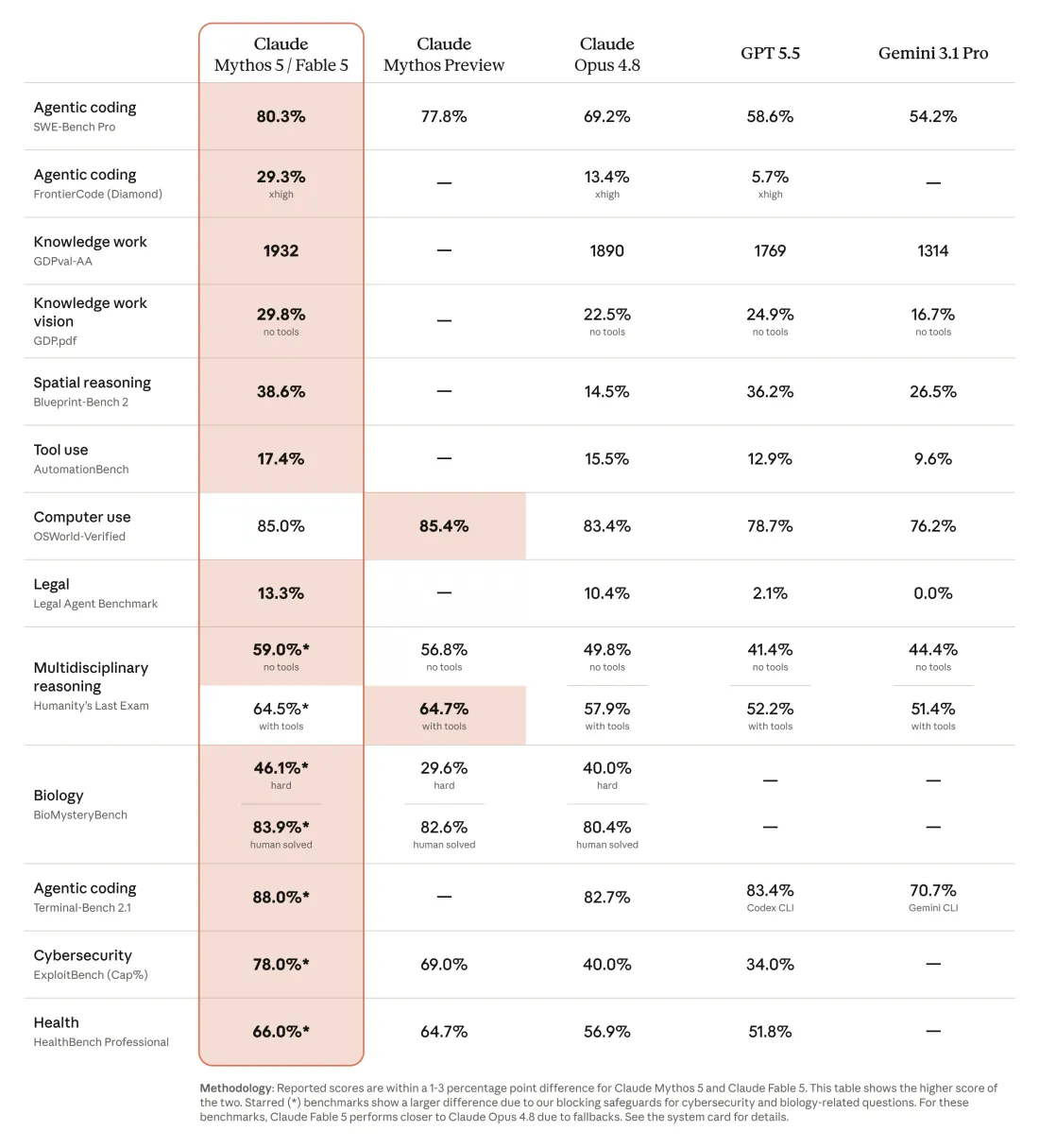
According to the official announcement, Claude Fable 5 stands out on three fronts that matter to anyone building software:
- Software engineering. Anthropic cites Stripe, according to which the model "compressed months of engineering into days".
- Long context. It stays focused "across millions of tokens" — meaning it can reason over very large codebases and documentation without losing the thread.
- Vision and complex knowledge. State-of-the-art results on visual tasks and a top score on an industry financial benchmark.
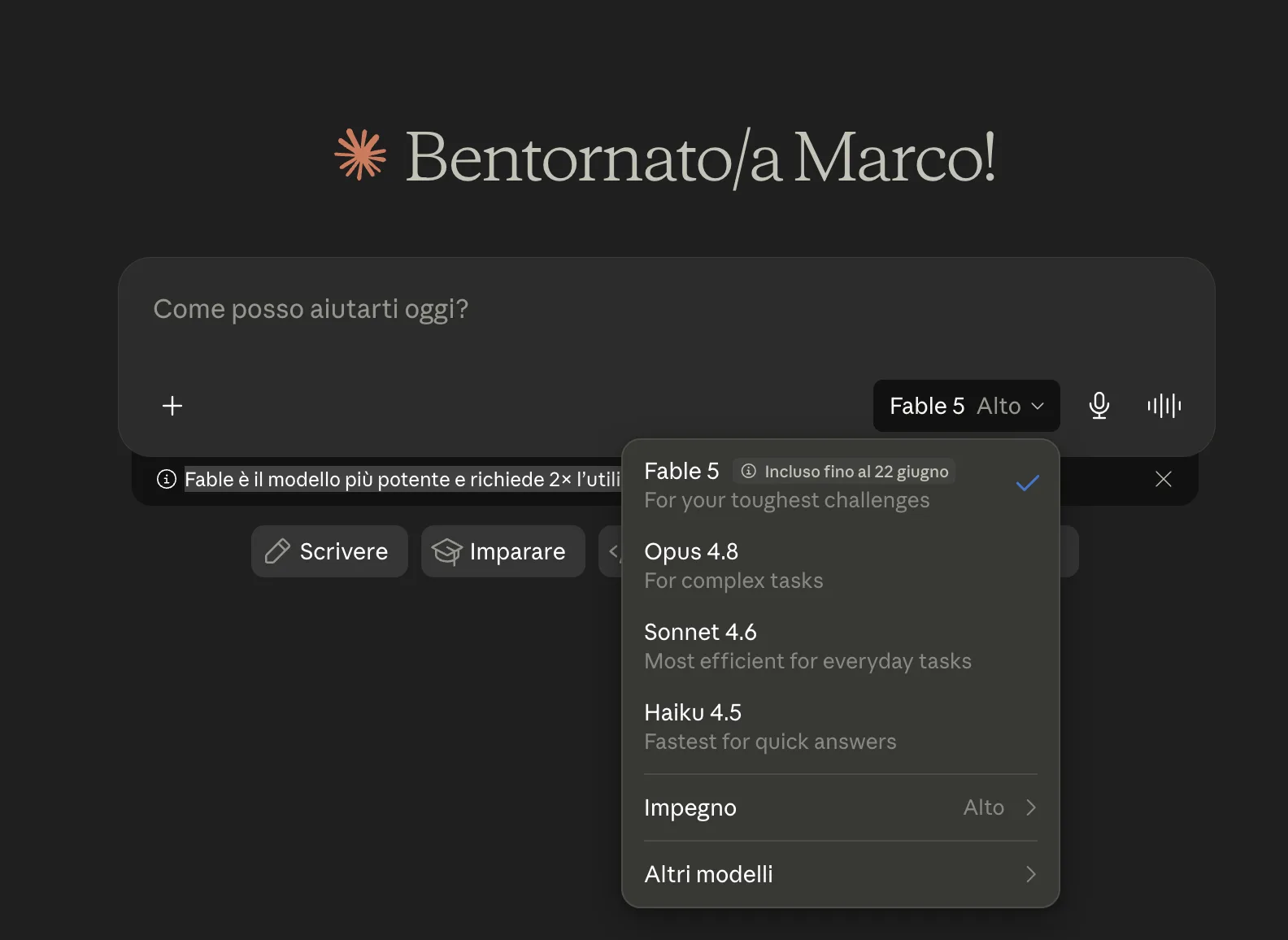
On the practical side, it costs 10 dollars per million input tokens and 50 per million output tokens, and there is a variant (Mythos 5) with some safeguards removed, reserved for cyber defenders. Beyond that: it's a stronger model that works well for longer and across more context. All true. But.
What does NOT change (and that's the point)
Every time a more powerful model ships, the same fantasy comes back: "now software builds itself". It doesn't, and anyone who builds real systems knows it. A better model executes better — it doesn't decide for you.
- Architecture remains a judgment call: which structure holds up under growth, which boundaries, which trade-offs. A model will propose ten paths; knowing which one is right for your stage is a different craft.
- Validation remains human: code that compiles and looks correct can break the edge case that only someone who knows the domain will see. The faster you produce, the more the person checking matters.
- Knowing what to buildremains yours: the model doesn't know your business, cash, and time constraints. Without that context, it will optimize the wrong thing beautifully.
So what changes for you
The right takeaway is this: not "now I don't need an engineer", but "a good engineer, today, does in days what used to take months".The value doesn't shift from the senior to the model — it multiplies in the senior's hands. A codebase audit, a massive refactor, a migration: with these models the timelines really do compress, as long as someone is orchestrating and validating.
That's exactly how I work: I decide architecture and strategy, I use the most capable models for the heavy lifting, and I review every step that goes to production. For whoever hires me it means one thing — faster, with the same rigor.
In short
Claude Fable 5 is a real leap forward, especially on code. But it doesn't change the underlying rule: the tools get more powerful, while the need for someone who makes the right decisions doesn't go away — if anything, it grows. Those who use these models to amplify a senior mind will move much faster than those hoping the models do everything on their own.
Do you have a project to build or modernize, or a team to bring onto AI the right way? See how I work with AI agents or let's talk for 30 minutes, free. I reply within 24 hours.